The Utility and Importance of Creeds and Confessions

Product Details
- Name
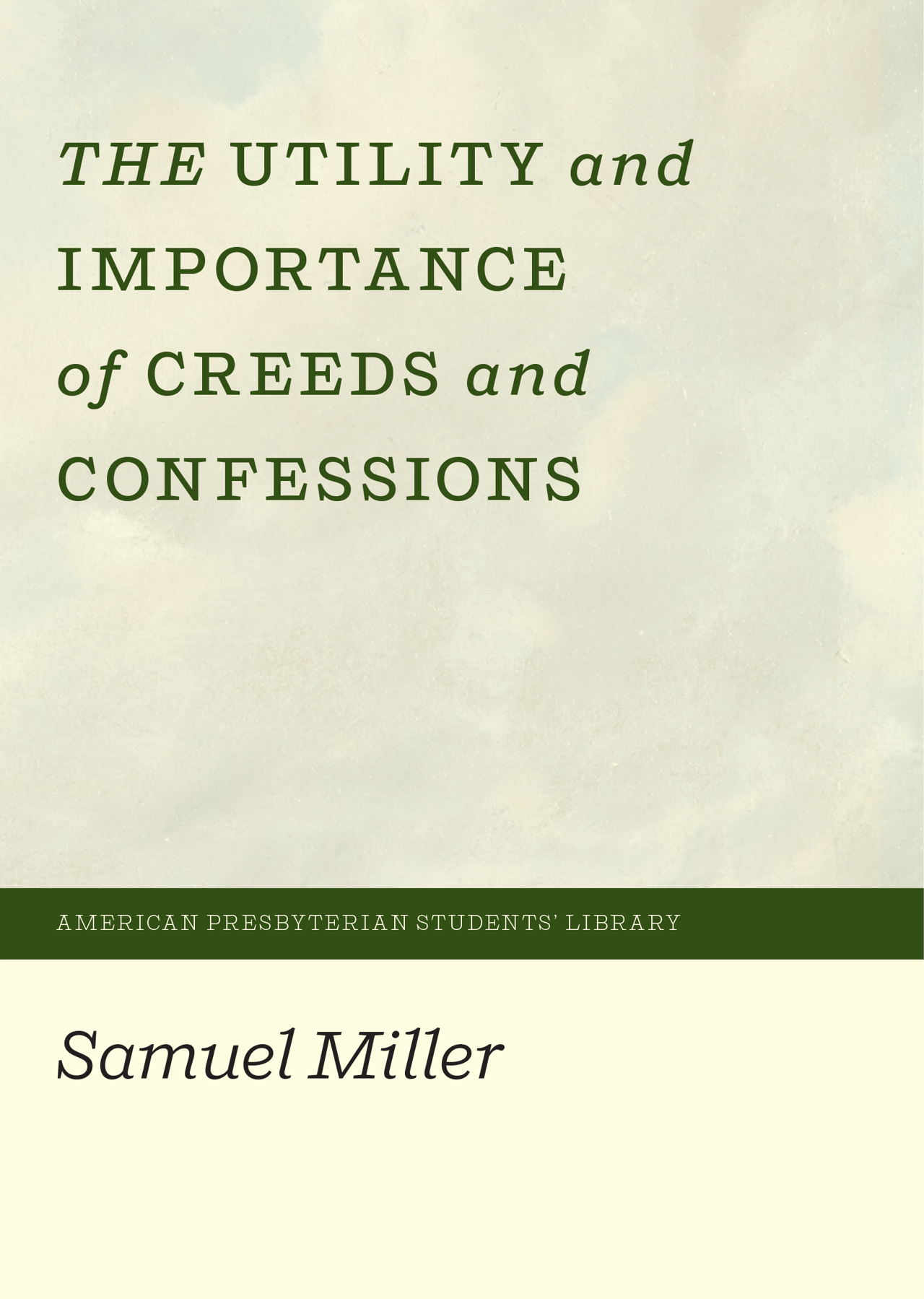
- The Utility and Importance of Creeds and Confessions / Hardcover
- SKU
- 9781948102544
- Format
- Hardcover
- Pages
- 117
- Length
- 7.5
- Width
- 5.25
- Height
- 0.5
- Weight
- 0.5
Description
The world around us often views firm convictions about truth and error as the height of arrogance—even dangerous. Yet many Christians persist in holding to the ecumenical creeds and confessions of faith such as the Westminster Confession of Faith. Are they foolish, misguided, and prideful? Or are they wise, Scriptural, and humble? Samuel Miller, one of the first professors at Princeton Theological Seminary in New Jersey, believed that creeds and confessions were vital for maintaining the unity and purity of the visible church, and in this brief work he sets forth arguments for this position and engages with objections to it. As Dr. Jonathan Master writes in his preface to this work, “[Miller’s] case is as compelling today as it was when it was initially written.”
Endorsements
“In the world of constant change in which we now live, the faithful proclamation of the faith once delivered to the saints is becoming more vexed and problematic than perhaps ever before. How do we maintain fidelity to the gospel while everything around us seems to be in a state of flux? In such a context creeds and confessions are singularly important and so this little work by Samuel Miller will repay careful reflection by church officers and laypeople alike. While not addressing many of the specific problems we face today, Miller still lays out the basic foundations for a biblically sound and practically prudent confessionalism. Highly recommend.”
— Dr. Carl Trueman
“After two hundred years, Samuel Miller’s, The Utility and Importance of Creeds and Confessions, is as fresh and readable as the day it was penned. It continues to offer definitive answers to those who worry that confessional subscription is unnecessary, divisive, undermining of biblical authority, and binding to the consciences of those who subscribe to them. Miller’s incisive response to these objections has yet to be refuted. Lucid, engaging, and accessible, this remains the classic text in support of the creedal imperative.”
— Dr. David Strain